

Skip to content
Law Society of Scotland
Search
Find a Solicitor
Contact us
About us
Sign in
Search
Find a Solicitor
Contact us
About us
Sign in
  • For members

    • For members

    • CPD & Training

    • Membership and fees

    • Rules and guidance

    • Regulation and compliance

    • Journal

    • Business support

    • Career growth

    • Member benefits

    • Professional support

    • Lawscot Wellbeing

    • Lawscot Sustainability

    • Lawscot Tech

  • News and events

    • News and events

    • Law Society news

    • Blogs & opinions

    • CPD & Training

    • Events

  • Qualifying and education

    • Qualifying and education

    • Qualifying as a Scottish solicitor

    • Career support and advice

    • Our work with schools

    • Funding your education

    • Social mobility

  • Research and policy

    • Research and policy

    • Research

    • Influencing the law and policy

    • Equality and diversity

    • Our international work

    • Legal Services Review

    • Meet the Policy team

  • For the public

    • For the public

    • What solicitors can do for you

    • Making a complaint

    • Client protection

    • Find a Solicitor

    • Frequently asked questions

    • Your Scottish solicitor

  • About us

    • About us

    • Contact us

    • Who we are

    • Our strategy, reports and plans

    • Help and advice

    • Our standards

    • Work with us

    • Equality and diversity

Journal logo
  • PRACTICE

    PRACTICE

    • Practice

    • Corporate law

    • Criminal law

    • Employment law

    • Environment law

    • Family law

    • Industry updates

    • Intellectual property

    • Property law

    • Technology law

    • Technology and innovation

    • Practice

    • Corporate law

    • Criminal law

    • Employment law

    • Environment law

    • Family law

    • Industry updates

    • Intellectual property

    • Property law

    • Technology law

    • Technology and innovation

  • PEOPLE

    PEOPLE

    • People

    • Equality, diversity & inclusion

    • Ethics & professional responsibility

    • Obituaries

    • Wellbeing & support

    • Noticeboard

    • From the President's desk

    • People

    • Equality, diversity & inclusion

    • Ethics & professional responsibility

    • Obituaries

    • Wellbeing & support

    • Noticeboard

    • From the President's desk

  • CAREERS

    CAREERS

    • Careers

    • Job board

    • Leadership

    • Management

    • Skills

    • Training & education

    • Careers

    • Job board

    • Leadership

    • Management

    • Skills

    • Training & education

  • KNOWLEDGE BANK

    KNOWLEDGE BANK

    • Knowledge Bank

    • Book club

    • Interviews

    • Sponsored content

    • Next Generation of Scottish Legal Talent

    • The Future of Law on our High Streets

    • Behind the Scenes with Scotland’s In-House Legal Professionals

    • Knowledge Bank

    • Book club

    • Interviews

    • Sponsored content

    • Next Generation of Scottish Legal Talent

    • The Future of Law on our High Streets

    • Behind the Scenes with Scotland’s In-House Legal Professionals

  • ABOUT THE JOURNAL

    ABOUT THE JOURNAL

    • About the Journal

    • Journal contacts

    • Journal Editorial Advisory Board

    • Newsletter sign-up

    • About the Journal

    • Journal contacts

    • Journal Editorial Advisory Board

    • Newsletter sign-up

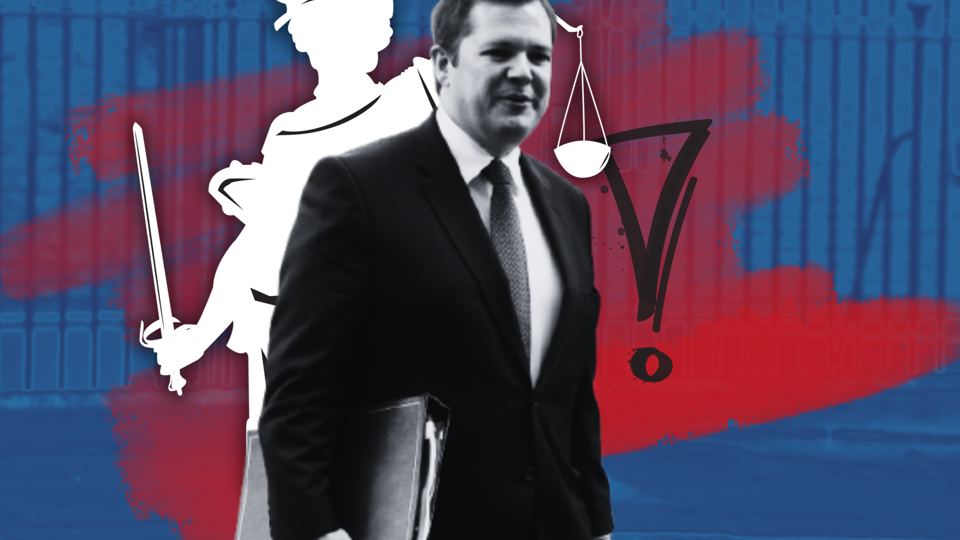
Analysis — Robert Jenrick’s ‘dangerous’ rhetoric undermines rule of law and solicitors across the land
9th October 2025 Written by: Joshua King

Rewind nine years and the UK was outraged when senior judges were branded ‘ENEMIES OF THE PEOPLE’ by a national newspaper. Look how far we’ve fallen.

The rule of law was threatened, people rightly said. The judiciary were made into targets; the entire legal system was upended with the suggestion politics had infiltrated the courtroom.

It’s a sign of just how far the Overton Window has lurched that a politician – the Shadow Secretary of State for Justice and Shadow Lord Chancellor nonetheless – was comfortable standing at his party’s national conference to say judges today are blurring the line ‘between adjudication and activism’.

Some were outraged by Robert Jenrick’s remarks. Legal professionals have certainly let their thoughts be known. But it appears the questioning of the judiciary and the rule of law is now fair game British political discourse.

The Law Society of Scotland has pushed back on Jenrick’s speech, calling out the comments and the increasing prevalence of the undermining of the independence of the judiciary.

Society President Patricia Thom said: "Robert Jenrick's comments about so-called 'activist' judges are dangerous and unacceptable. We strongly condemn such rhetoric, which appears designed to undermine the independence of the judiciary and its fundamental role in safeguarding our constitution.

"Politicians have a responsibility to respect the role of judges in upholding the rule of law and interpreting legislation as passed by Parliament, and to accept that judicial appointments are made at arm's length from political interference.

"It is notable that Mr Jenrick has provided no legal basis for questioning the validity of judicial decisions with which he does not agree. Unlike politicians, members of the judiciary are expected to be strictly impartial when considering how the law should be applied, and also have no right of reply.”

Thom added: "Dangerous rhetoric such as this has sadly been on the increase for several years, and we have numerous examples in other countries of the dire consequences for democracy and the rule of law when judicial independence is stymied."

What did Robert Jenrick actually say?

Standing with a judge’s wig as a blunt prop, Jenrick said he would stop judges who ‘blur the line between adjudication and activism’ by giving ministers a bigger role in filling judicial vacancies.

The allegations were based on his suggestion that judges linked to pro-migrant charities could not be objective. Under a Conservative government, Jenrick said his party would reverse the New Labour-era restrictions on ministerial involvement in appointments.

The Judicial Appointments Commission was established in 2006 to improve the transparency and independence of judicial selections.

Jenrick told delegates that he had found ‘dozens of judges’ who had ‘broadcast their open borders views’ on social media. No one was named, but Jenrick said these judges had dishonoured ‘generations of independent jurists who came before them’.

Former Supreme Court judge Lord Sumption said the Shadow Justice Secretary’s proposals risked an American-style politicisation of the judiciary.

Speaking on BBC Radio 4’s The World at One, he said: "The only possible reason for going back to the old system would be to appoint judges who were less independent or more political than the ones appointed by the Judicial Appointments Commission.”

Weekly roundup of Scots law in the headlines including Sandy Peggie tribunal and landmark lawyer treaty — Monday December 15

15th December 2025
This week's review of all the latest headlines from the world of Scots law and beyond includes the fallout from an NHS Fife employment tribunal and international calls to protect lawyers.

12 laws of Christmas – Yuletide cases and customs that shaped Scotland

11th December 2025
Peter Ranscombe squeezes back into his Santa suit to explore some of the Scots law cases and Acts that have festive connections.

Possible new treaty to resolve concurrent court proceedings — Hague Conference consultation

11th December 2025
Solicitors are being given the opportunity to join a Ministry of Justice session with practitioners across the UK to learn more about a global consultation on cross-border concurrent court proceedings.
About the author
Joshua King
Editor of the Journal of the Law Society of Scotland. Leading The Journal's coverage of the legal sector and profession with a clear eye to the future. Qualified in Scots law.
About
Add To Favorites

Additional

https://www.evelyn.com/people/keith-burdon/
https://lawware.co.uk
https://www.lawscotjobs.co.uk/client/frasia-wright-associates-92.htm
https://www.findersinternational.co.uk/our-services/private-client/?utm_campaign=Scotland-Law-society-Journal-online&utm_medium=MPU&utm_source=The-Journal
https://yourcashier.co.uk/

Related Articles

12 laws of Christmas – Yuletide cases and customs that shaped Scotland

11th December 2025
Peter Ranscombe squeezes back into his Santa suit to explore some of the Scots law cases and Acts that have...

Possible new treaty to resolve concurrent court proceedings — Hague Conference consultation

11th December 2025
Solicitors are being given the opportunity to join a Ministry of Justice session with practitioners across the UK to learn...

The Charities Accounts (Scotland) Amendment Regulations 2025 — what they mean in practice

10th December 2025
The Scottish Government has introduced a major reform of charity accounting rules through The Charities Accounts (Scotland) Amendment Regulations 2025...

Journal issues archive

Find all previous editions of the Journal here.

Issues about Journal issues archive
Law Society of Scotland
Atria One, 144 Morrison Street
Edinburgh
EH3 8EX
If you’re looking for a solicitor, visit FindaSolicitor.scot
T: +44(0) 131 226 7411
E: lawscot@lawscot.org.uk
About us
  • Contact us
  • Who we are
  • Strategy reports plans
  • Help and advice
  • Our standards
  • Work with us
Useful links
  • Find a Solicitor
  • Sign in
  • CPD & Training
  • Rules and guidance
  • Website terms and conditions
Law Society of Scotland | © 2025
Made by Gecko Agency Limited